Canon PowerShot G7X III review
Sum-up
 The PowerShot G7X Mark Leash updates Canon's most popular compact with some unexpected features which testament delight videographers and vloggers particularly. It keeps the earlier 24-100mm lens and much the same body and controls, but adds a 3.5mm microphone input, the chance to live well out direct to YouTube over Wifi, and allows you to film vertically-formatted video for Instagram Stories and other phone platforms. The firmness of purpose cadaver 20 Megapixels, but the presence of a stacked CMOS sensor allows 4k video, 1080 slow motility capable 120p, and debauched burst shooting at 20fps or in a RAW-only mode at 30fps. The sensor is probably the same as Sony's older RX100 IV which means the G7X Triplet may gain 4k and extra hurry but sadly not the phase-detect AF introduced on the later RX100 Mark V which means the autofocus is less reassured than the fashionable Sonys, although a firmware update in October 2019 has at least improved the G7X III video AF speed over its original exit. Strangely the G7X III also loses 24p video from its predecessor and lacks eye-detection too. So the superior AF and popup viewfinder of the RX100 VA is hard to ignore, merely then IT costs one tertiary more than the G7X III piece lacking the mic input, live streaming, touchscreen and slightly longer zoom range. Atomic number 3 such while there's some inevitable frustrations, Canon has debuted a number of unique features that will make the G7X III as popular as its predecessors. If you for the most part shoot photos, you'll prefer the longer zoom and viewfinder of the G5X II which still manages to undercut the RX100 VA, but if your focalise is vlogging and general use without breaking the bank, the G7X III comes Highly Recommended.
Buy it forthwith!
Retard prices on the Canyon PowerShot G7X III at B&H, Virago, Adorama or WEX. Alternatively get yourself a copy of my In Camera book or care for me to a coffee! Thanks!
Canon PowerShot G7X Leash review -
- Written by
Introduction
The Canon PowerShot G7X Mark III is a high-closing compact aimed at photography enthusiasts and vloggers. Announced in mid-2019, trinity years aft the G7X Mu Cardinal, it keeps the 24-100mm f1.8-2.8 lens and much the indistinguishable body, but updates the sensor for faster shooting and uncropped 4k video, and becomes the first 1in compact with a mike input and the ability to hot stream straight to YouTube.
The basic concept follows the same formula equally its predecessors, not to mention Sony's popular RX100 series: to surrender wagerer quality than your phone while remaining pocket-sized. They do this past using a larger 1in sensor coupled with a bright lens, a combination that can actually some match a basic DSLR or mirrorless camera when fitted with a standard f3.5-5.6 kit up zoom. IT's this combination of quality and size that makes them indeed popular.
After several generations victimisation the Saami sensor, Canon's equipped the G7X III (also as the G5X Cardinal launched aboard IT) with a stacked CMOS sensing element – the same 20 Megapixel resolution as ahead, but well quicker, allowing uncropped 4k video at 25 Oregon 30p, 1080 video busy 120p and fast bursts including a RAW manner at 30fps. I'm guess it's the same detector Sony used in the RX100 IV which means it lacks the phase-detect autofocus of the advanced Punctuate V, merely t least you're getting the telecasting and busted upgrades. The G7X III also lacks the built-in view finder of the RX100 Trine onwards, but it zooms longer, has a touchscreen and now features a microphone input as healthy as the chance to live stream over Wifi non to mention maintaining the vertical orientation of videos for IG Telly if desired. These upgrades make what was already a best-selling choice for vloggers even more attractive.
I've recorded two in-depth videos about the G7X III, comparing it to the G5X II and also the Sony RX100 VII for good appraise. The first off looks the least bit the general design and photographic features, piece the second concentrates connected comparing their capabilities as vlogging cameras- be sure to watch them some for a grumbling study on their total features. I've as wel added a third telecasting dedicated to comparison 1080 and 4k video, stabilisation and microphone options for vlogging specifically on the G7X III alone, and in an October 2019 update I've added some other vlogging test to examine out the new microcode and see if the autofocus has improved. All below!

The G7X Leash and G5X Two are both high-end compacts launched in mid-2019. Some share the same photo and video quality, although the G7X III is aimed Thomas More at vloggers while the G5X Two is more than of an EOS companion for stills picture taking. Both models partake in much in common, so on this page I'll be reviewing them side-by-side. I'll start with what's the same happening both models, so detail what makes them different from each other along with their predecessors and key rivals. So by the end of this you'll know exactly which one is best for you! Both models arrived or so the same time as Sony's modish RX100, the Mark VII, and since they share a similar target commercialize I'll comparison all three throughout this look back.
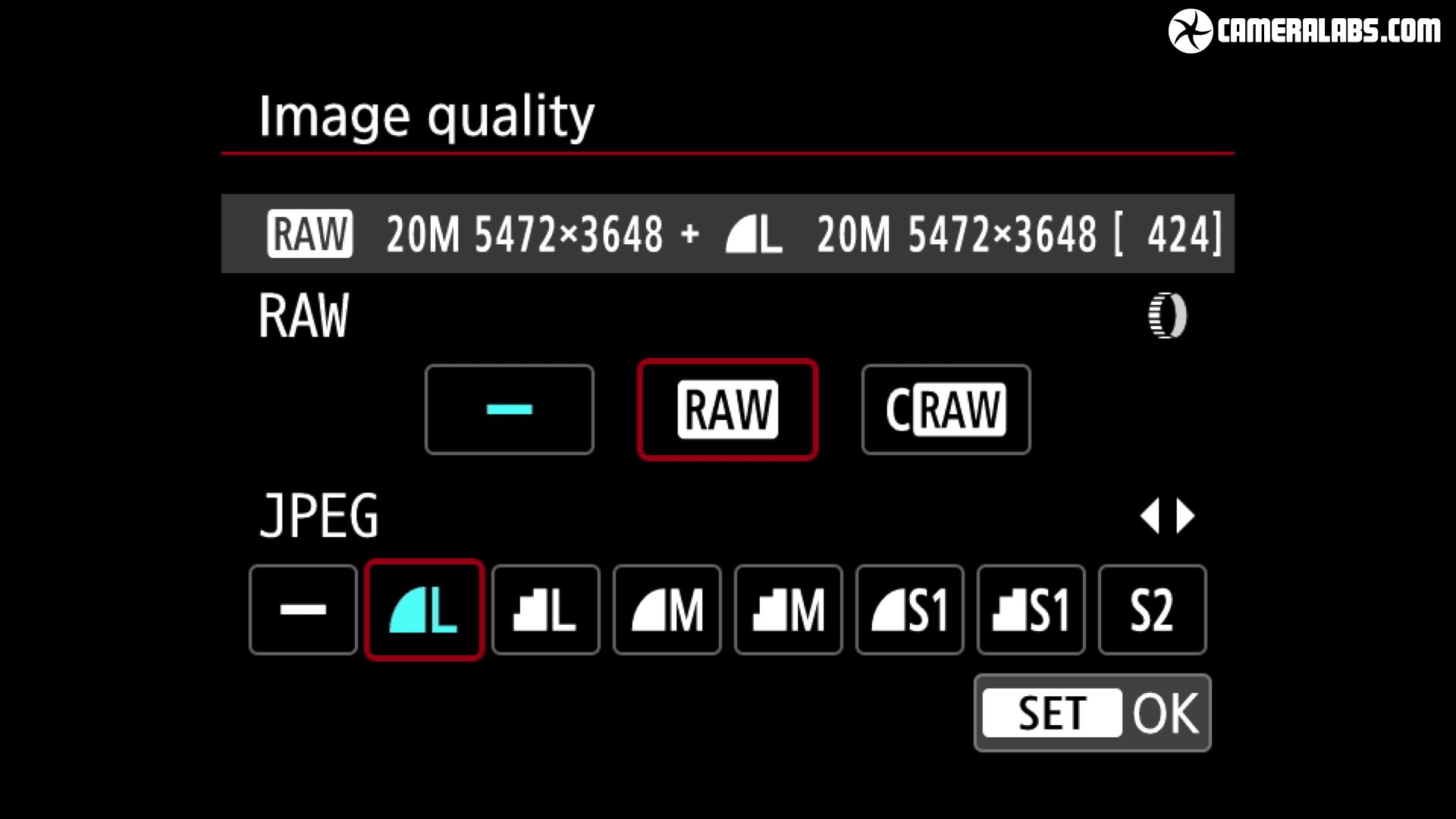
All threesome cameras apply 1in sensors with 20 megapixels and a stacked CMOS design for fast peformance. A 1in sensor has roughly fourfold the area of the sensor in your telephone set, allowing it to deliver lower noise in shadows or dim conditions, as comfortably as retaining keyed inside information in scintillant highlights, so the overall photo and video quality, not to name stabilization and ergonomics should all live superior to a phone.

Both Canon models share the Saami flip-screen which angles down by about 45 degrees or up by 180 degrees to face up you for vlogging operating theatre selfies. Canon detected some vloggers holding the camera by the screen so has beefed-up the mechanics over elderly models.

Canon's touch interface remains one of the best approximately letting you reposition the AF area, tap the operate options, pinch your way through with the chief carte pages, As fountainhead every bit swiping between images in playback. Now this degree of touch functionality may seem obvious in the old age of phones, merely it's yet to accomplish Sony's camp where the touchscreen even on the RX100 7 has nary effect on the menus and minimal use even in playback. You can of course use the physical controls for navigation if you prefer and despite the sized of the cameras, both Canons have very tactile buttons which to Maine felt much improve than the ones on the Sony RX100s.
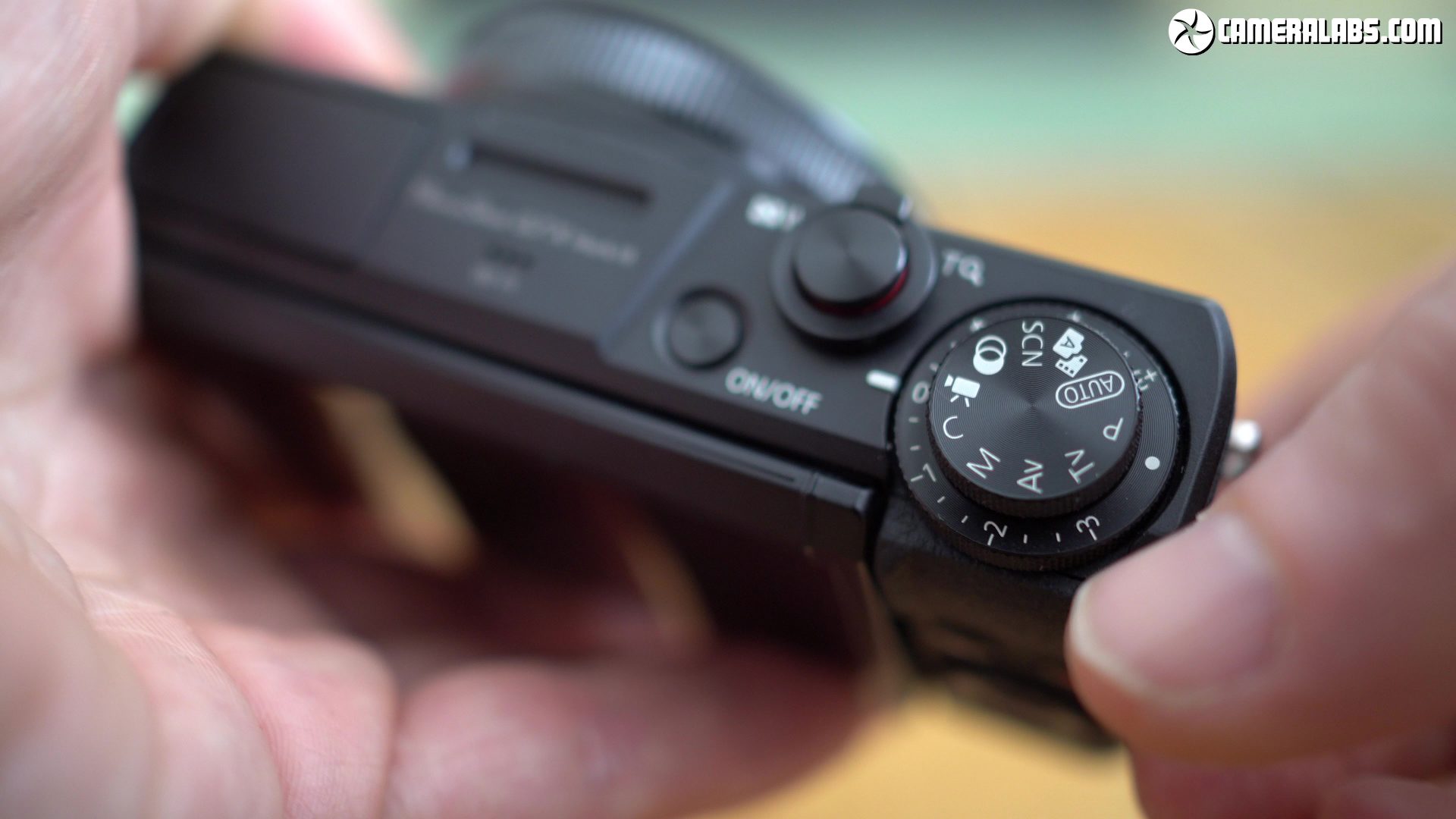
Some Canons also offer a consecrate exposure recompense dial with the main mode dial along summit. In demarcation the Sony's lone mode dial is flush to the top open making its Sir Thomas More sleek shape easier to slip into tighter pockets, but losing out happening a dedicated compensation controller.
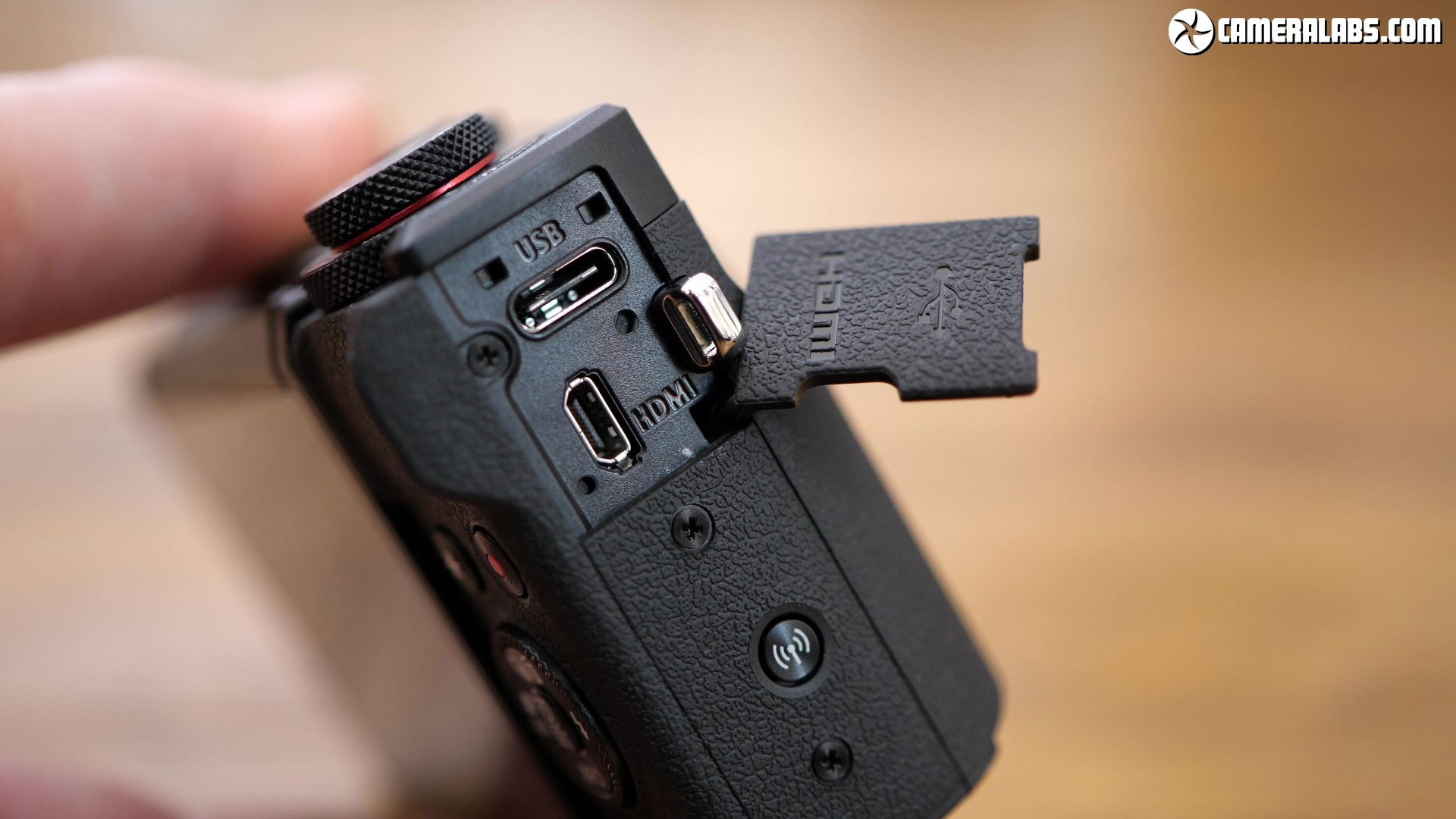
Canon's equipped both the G7X III and G5X II with Micro HDMI and USB-C ports, while Sony's stuck with Little USB happening the RX100 VII. All three can buck their batteries internally over USB, although Canon also supplies an international AC charger. All three can also be powered for operation all over USB and while the Sony requires you to only have a trickle of charge in the battery for this to work, the Canons amazingly don't even need the barrage to be fitted at all. Just connect it to a USB C supply and you'ray good to go. It worked small with the charger for my 13in MacBook Pro. Good job all thee allow easy USB charging and power delivery though as you're solely looking at around 200 photos or 60 transactions of telecasting per charge.
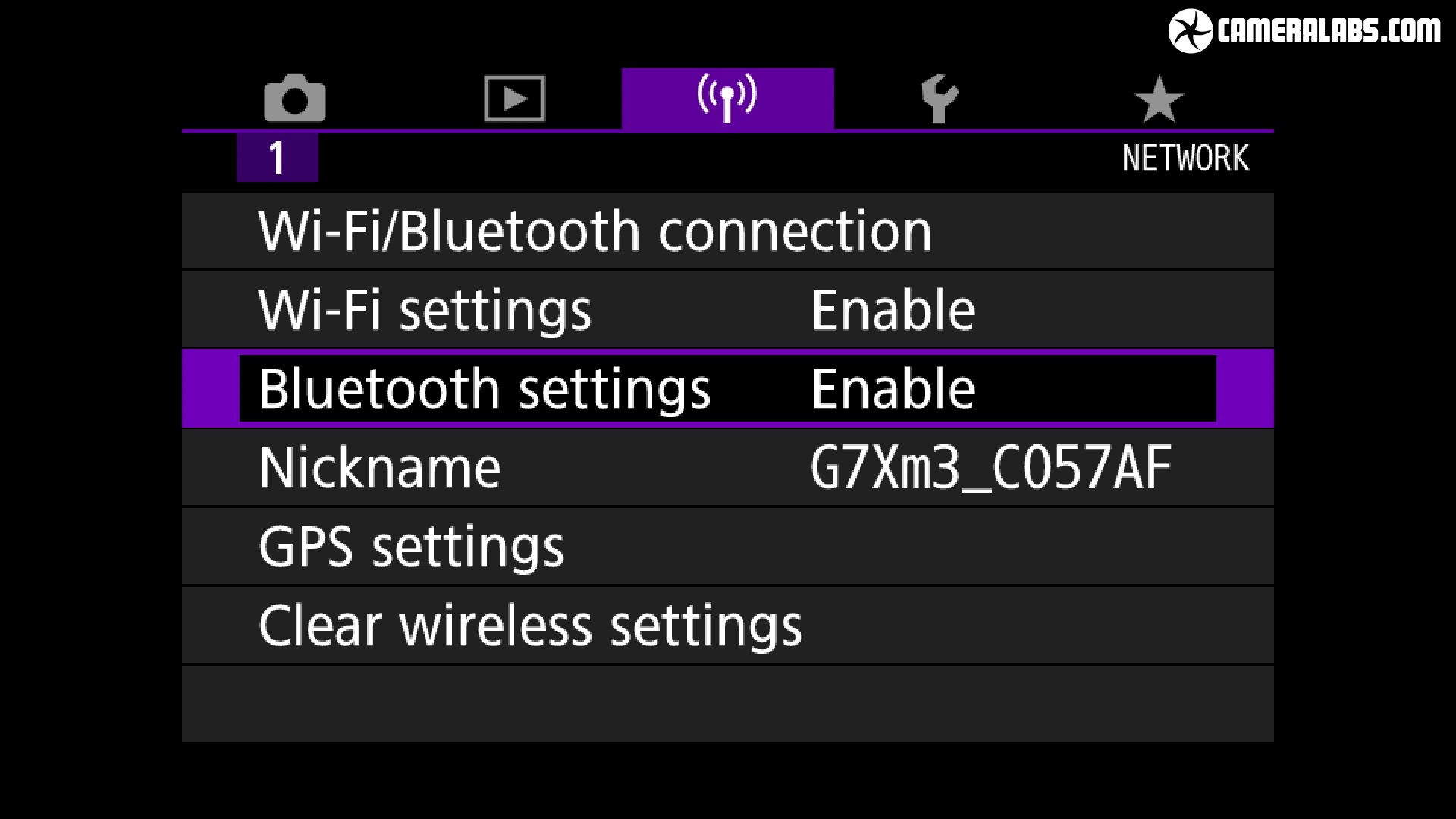
All three cameras have good wireless features with some Wifi for fast photo and video transfer of training and wireless remote, American Samoa recovered as Bluetooth for seamless location tagging via your phone as you shoot. The G7X III takes this further with YouTube live streaming I'll show off you afterward.

In terms of television, both Canons can film half hour clips of 1080 video at 25, 30, 50 or 60p, dependant on the television setting, although there's no 24p option any longer with No satisfactory account as to where it's gone. High amphetamine 1080 video is too visible at 100 or 120p for tiresome gesture. Sadly there's zero sound or autofocus during high speed video on either Canon, unlike the Sony RX100 VII which impressively supports some, not to observe allowing filming in 24p if desired.
Preceding: Download the original file (Registered members of Vimeo only). Here's the G7X III filming in 1080 at 100p for a four times slow-down. The footage is slowed in-camera to 25p for Chum up regions Oregon 30p for NTSC, so this is what you see when playing it back; over again there's no sound operating theater endless AF in the high swiftness video mode, unlike Sony which gives you both.
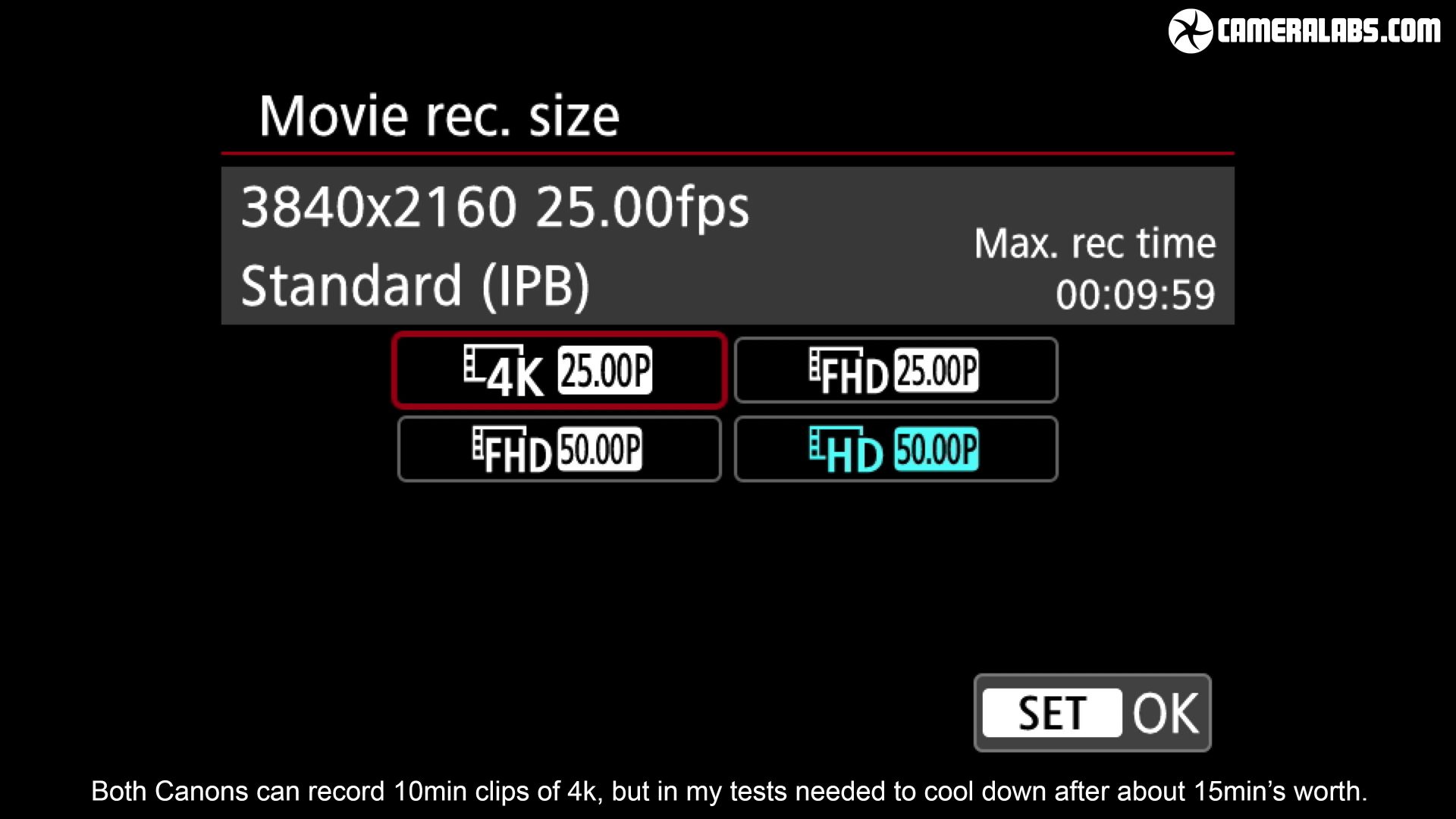
The G7X III and G5X II finally join the RX100 series in offering 4k video, although there's a few key differences. Canon only lets you picture 4k in 25p surgery 30p dependant on the telecasting setting, while Sony lets you choose between 24, 25 or 30p. Canon's 4k is uncropped compared to a minor harvest for 4k connected the Sony, although in my tests the RX100 VII's 4k video enjoyed more detail. In terms of transcription times, the Canon's will record 10 minute clips of 4k compared to 5 minute clips on the Sony, although if you reduce the heat warning on the RX100 VII I found it could actually record just over an time of day of 1080 or 4k on a single clip.

Both Canons use a contrast-based autofocus system which can attempt to refocus while cinematography, but with variable succeeder.
Above: Download the original file (Registered members of Vimeo only). In this lop using the touch screen to rend-focus betwixt the can in the foreground and the back off of the shop, the G7X III is in reality doing a fair job, although compare it to the RX100 VII and you'll see the phase-detect AF on the Sony is more sure. You can really check the difference though when motion-picture photography people where the G7X III needs a short pause for its focus to take in up with the dependent, and if they prevent heartwarming back and Forth River, it struggles to hold up a sharp effigy. In contrast the phase detect AF system of the RX100 5, 6 and 7 feels much many confident, holding subjects sharper American Samoa they retire and forth.

Both Canon's however enjoy a key advantage over the Sony RX100 Sevener when it comes to motion-picture photography video and that's the presence of a built-in ND filter which when enabled makes it easier to deploy motion-friendly shutter speeds in bright conditions. In contrast if you want to film with slower shutters on the RX100 VII you'll need to either fit a third political party attractive force filter system, close the aperture down or seek out dimmer conditions. Otherwise you're looking at using fasting shutter speeds with a choppy effect.

If you're into grading TV, the best pick on the Canons is the Inert profile seen here on the right with all the parameters inside-out to their lowest settings. The Sonys are better in that compliments with their blandish S-Logarithm profiles.

The G7X III and G5X II share the same split shot capabilities with a top rush of 20fps in Single AF mode. You terminate see it in natural action hither every bit the block is dropped in the water, although if you want to refocus on a subject moving towards or off from you with Servo AF enabled, the burst speed waterfall to 8fps.

Present's the G7X Three attempting to refocus along me simply walking towards the camera and you can see its line-based AF organisation becomes much less confident. When set to Servo AF for continuous autofocus, you also turn a loss face detection and are minor to a single AF area, so woe-betide if you move out from it. Encounter the de facto clip in my main picture review at the upmost of this page.

In stark contrast, here's Sony's RX100 VII shot at 20fps with facial expressio and eye detection operative just fine with nonstop AF crosswise the entire frame, piece its phase angle-notice autofocus system of rules is to a greater extent confident for refocusing connected moving subjects than the counterpoint system on the Canons. See the actual trot in my main video review at the peak of this page.

The Sony will even at present offer eye detection for animals, which coupled with everything other makes it outlying preferable for photographing sports, wildlife or active kids and pets.

With the G7X III and G5X II, Canon also introduced a new RAW explosion fashion which exploits the focal ratio of the stacked sensor to shoot a bristle of Rare files at 30fps for up to a generous 70 frames. Better still, IT offers a pre-shot option that keeps a rolling buffer of the second half-second's deserving of action American Samoa you donjon the shutter half-pressed – then as you drive down fully, these last 15 images are committed to memory plus capable 55 more. These are stored in a single large file which can be navigated during playback on the cameras.

You stern see information technology in action Hera with the straight bar on the left representing the state of the buffer filling as I half-press the shutter. I then pushed information technology full the moment I saw the block enter the ensnare by which time it had already hit the water.

Without pre-shooting I'd bear missed the first encroachment but thanks to the half-2d in the bank I bum in effect rewind and extract JPEGs or RAW files of the key moments. It's non dissimilar to the 4 and 6K Exposure modes on Panasonic cameras, merely they operate at depress resolutions and only allow you to pull up JPEGs. Not to atomic number 4 outdone, Sony also introduced a new higher hie mode on the RX100 VII which can shoot equal to 90fps, but only for 7 JPEG images and crucially without the benefit of pre-buffering, qualification it all but impossible to time the extremely short explosion to gibe with your fulfill.
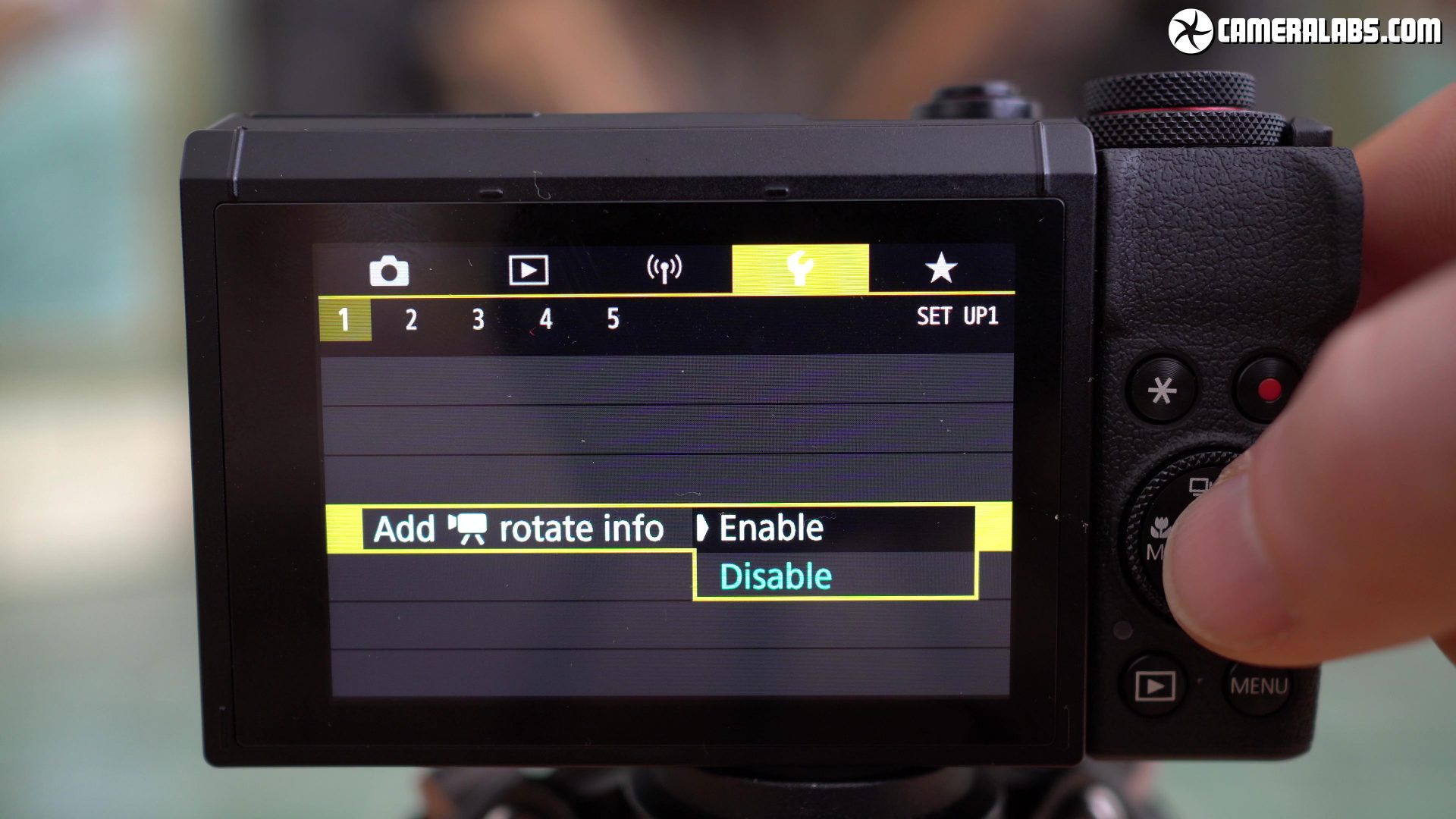
The Canons and Sony can now also preserve the orientation of video filmed vertically for use along Instagram stories or other phone apps. On the Canons you can choose whether the freehand orientation course is proud or not, only in a material deviation with the RX100 Sevener, I establish the Canon app imported video with sound as you'd carry, whereas the Sony app didn't import audio onto my phone thusly my clips were incommunicative. I think this is an incompatibility with the audio in Sony's XAVCS and Android phones, and I solved it by converting the file on my electronic computer, but that's nowhere as spacious as wirelessly copying the videos from the Canons onto your headphone and being able to post them A stories straightaway.
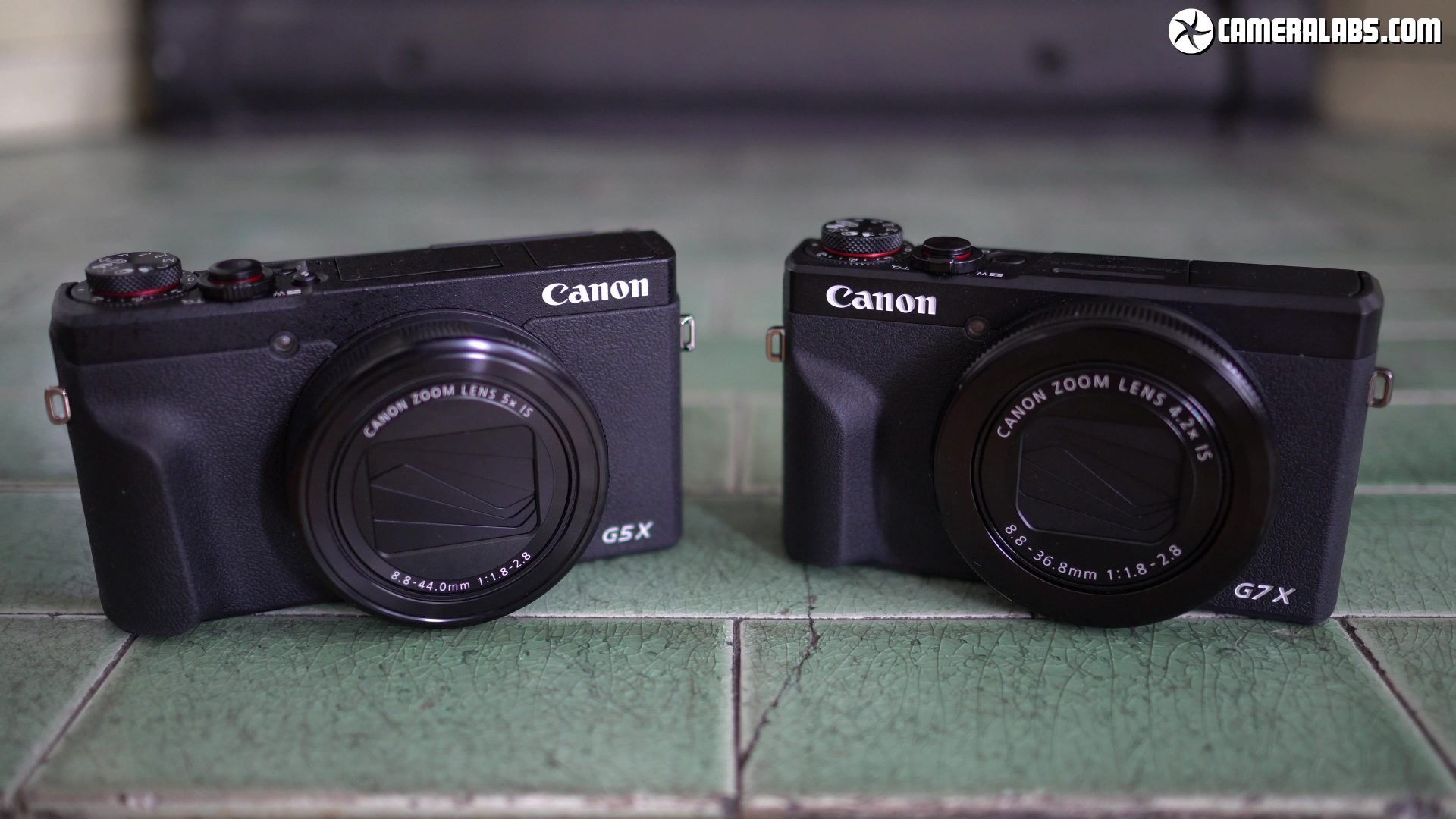
Ok so that's everything the Canon G7X Tierce and G5X II have in common. Right away for what makes them different.

About patently, there's their respective surg ranges of 24-100mm on the G7X III versus 24-120mm on the G5X II. Present's how the G7X III's range looks zooming from 24mm to its longest 100mm. The aperture is f1.8-2.8 and the closest focusing distance is 5cm at 24mm and 40cm at 100mm. The maximum aperture starts at f1.8 at 24mm then slows to f2 at 28mm, f2.2 at 35mm, f2.5 at 39mm, then reaches its token aperture of f2.8 at 55mm and stays with it complete the way awake to 100mm.

Rather than inheriting the G7X's 4.2x zoom again, Canyon's developed a new 5x zoom for the G5X II same to 24-120mm while maintaining the f1.8-2.8 point ratio. The aperture closes to f2 at 27mm, and so to f2.2 at 34mm, f2.5 at 44mm, and to the minimum f2.8 from 68mm clear to 120mm. The closest focus is 5cm at the astray-final stage and 20cm at the daylong-end, the latter allowing it to centerin much closer in telephotograph than the G7X III.

And now for the Sony RX100 VII's range which extends from 24-200mm, albeit with a slower f2.8-4.5 aperture. On the RX100 VII, the brightest aperture of f2.8 is only available at the widest focal length of 24mm. At 25mm information technology reduces to f3.2, and so to f3.5 at 30mm, and to f4 at 40mm. The Mark VI impressively maintains the f4 focal ratio between 40 and 109mm afterward which it reduces to f4.5 for the rest of the range capable 200mm. The nearest focusing aloofness is 8cm at the wide end and 1m at the long end.

Both Canons have a closest focusing distance of 5cm when zoomed wide to 24mm, and Here's an image showing the kind of depth of field you can expect at close range with the aperture opened to the full. The Canon G7X III is on the left, the G5X II in the middle and the Sony RX100 VII on the decently; both Canon's allowed f1.8, while the Sony's maximum aperture at 24mm is f2.8, and I took this at 8cm which is the closest focusing of the Sony at 24mm.

Zoom each camera to their telephoto end though and their respective closest focusing distances alter considerably. The Sony RX100 VII's nearest focus at 200mm is 1m, the G7X 3 at 100mm is 40cm, spell the G5X II at 120mm is 20cm, allowing it to focus much closer when zoomed-in. Soh what does that mean in do for macro-shooters? On the left is the Canon G7X III at 100mm from 40cm away, piece on the redress is the G5X Two at 120mm from 20cm out and the departure is dramatic work. The G5X II can focus much closer than either the G7X III operating theatre RX100 VII when zoomed-in, allowing gallant closeups without the distortion at wide angle. When weighing up the G5X Cardinal against the G7X III, the longer range, crisper optics and closer focal point all make it more tempting to photographers.

To illustrate the impact of their telephotograph differences, here's a portraiture shot taken with the G7X III at 100mm f2.8 on he unexhausted, and with the G5X II at 120mm f2.8 on the right. It can be subtle, merely I choose the view and slightly shallower depth of field connected the G5X Two version.

Just for comparison, here's the Sony RX100 Seven at 120mm on the right to match the coverage of the G5X Two on the left, but where information technology operates at a slower f4 focal ratio. For ME the biggest difference between the Canon and Sony here isn't the depth of battlefield, or even the benefit of a lower ISO on the brighter Canyon lens, but the image processing and colors exterior of camera. IT's whole personal, simply I prefer the feel of the portrait on the left from the G5X II versus the one on the right from the Sony.

Beyond the longer zoom, another major conflict between the two Canons is the constitutional viewfinder connected the G5X II. IT pops up and is pulled outwards in a two-step gesticulate which ISN't arsenic quick or convenient as the one-touch movement of the Sony RX100 6 and 7, but simply having a viewfinder of any description made the G5X Cardinal more pleasant to enjoyment for general photography than the G7X III. I shot with both cameras side-by-side and really missed having it happening the G7X Triplet, only equally information technology does add to the price and if you're mostly vlogging, you'll be using the shield.
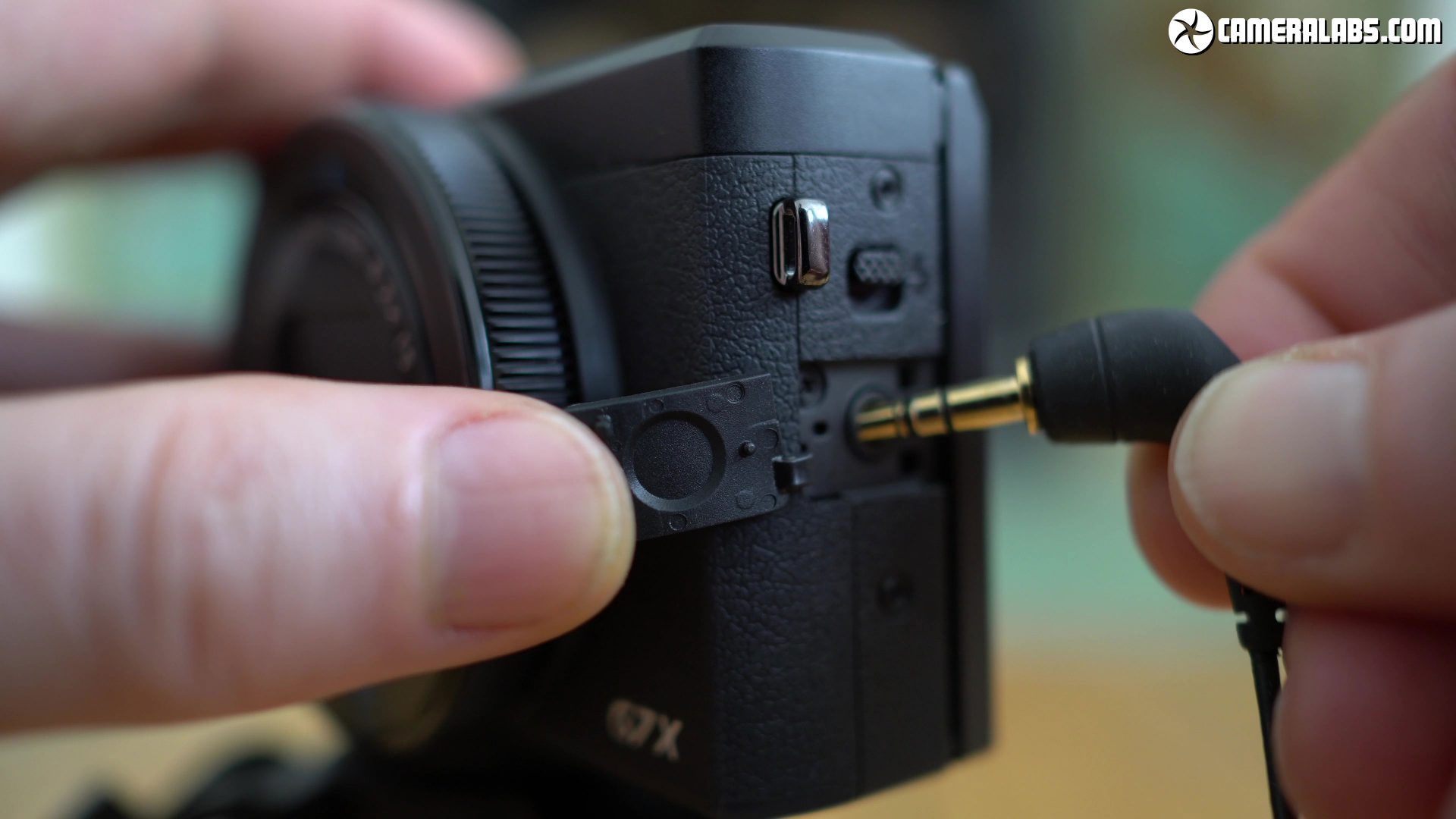
Earlier you think all the benefits are inclined towards the G5X II, the G7X III fights back with a 3.5mm microphone stimulation. This allows you to tie in a microphone for far better audio quality along movies.
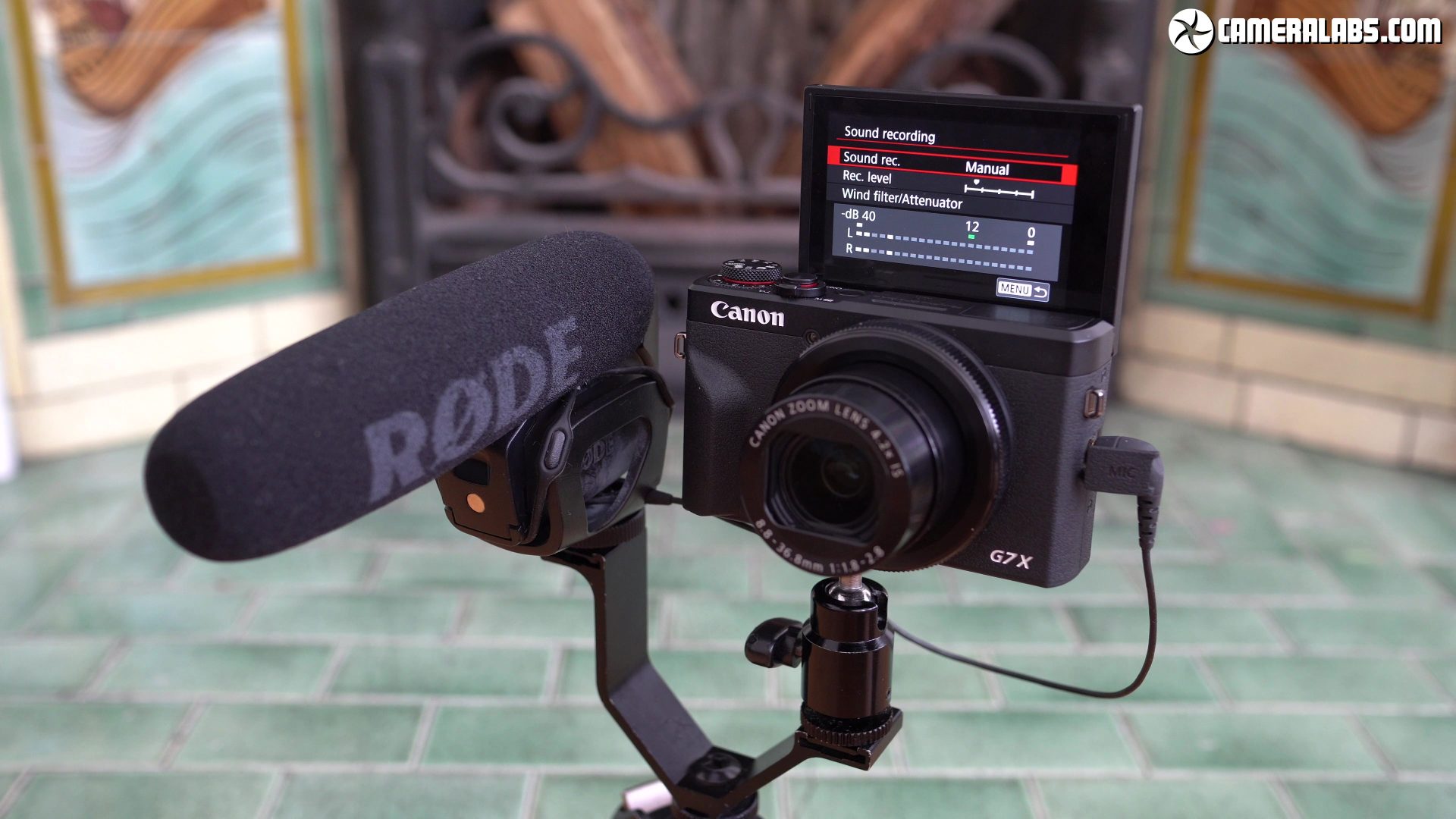
While at that place's none hotshoe for mounting an accessory, you can easily use a bracket or simply connect a lav mic immediately. The ability to connect a mic is pretty alone on a television camera of this size, although Sony's RX100 VII also has one. I cause a separate video comparison these three cameras for vlogging, on with one dedicated to the G7X III lonely which demonstrates their audio frequency, television and stabilisation; some are near the top of this page.

The G7X III extends its boss credentials over its sib for video by offering the chance to live watercourse direct to YouTube over Wireless local area network. In my tests at home connected my Virgin system, I found the hapless upload speed – typically 5Mbit/s during the day – was insufficient to go on a live stream going for more than just about two minutes. I had even to a lesser extent joyfulness tethering to 4G on my Three mobile connection on Brighton Pier. In some cases I couldn't stream efficaciously, but I believe that's out to my own net speeds. Your mileage will of course vary and if you take over faster net, you should beryllium able to live flow for longer. Either way, it's a cool new feature that I've non seen along any other photographic camera of its class.

While the zoom range, viewfinder, mic input and live streaming are the main differences betwixt the G5X II and G7X III, there are a routine of subtle variations on their bodies. Both have clicky lens control rings which no more declick for fine-textured operation, but they look and feel different – Hera's the G5X II's phone.

And now here's the control ring for the G7X Leash.

Meanwhile Sony's away for a inarticulate unruffled lense ring which is apotheosis for video recording, but gives nary tactile feedback for general photography.
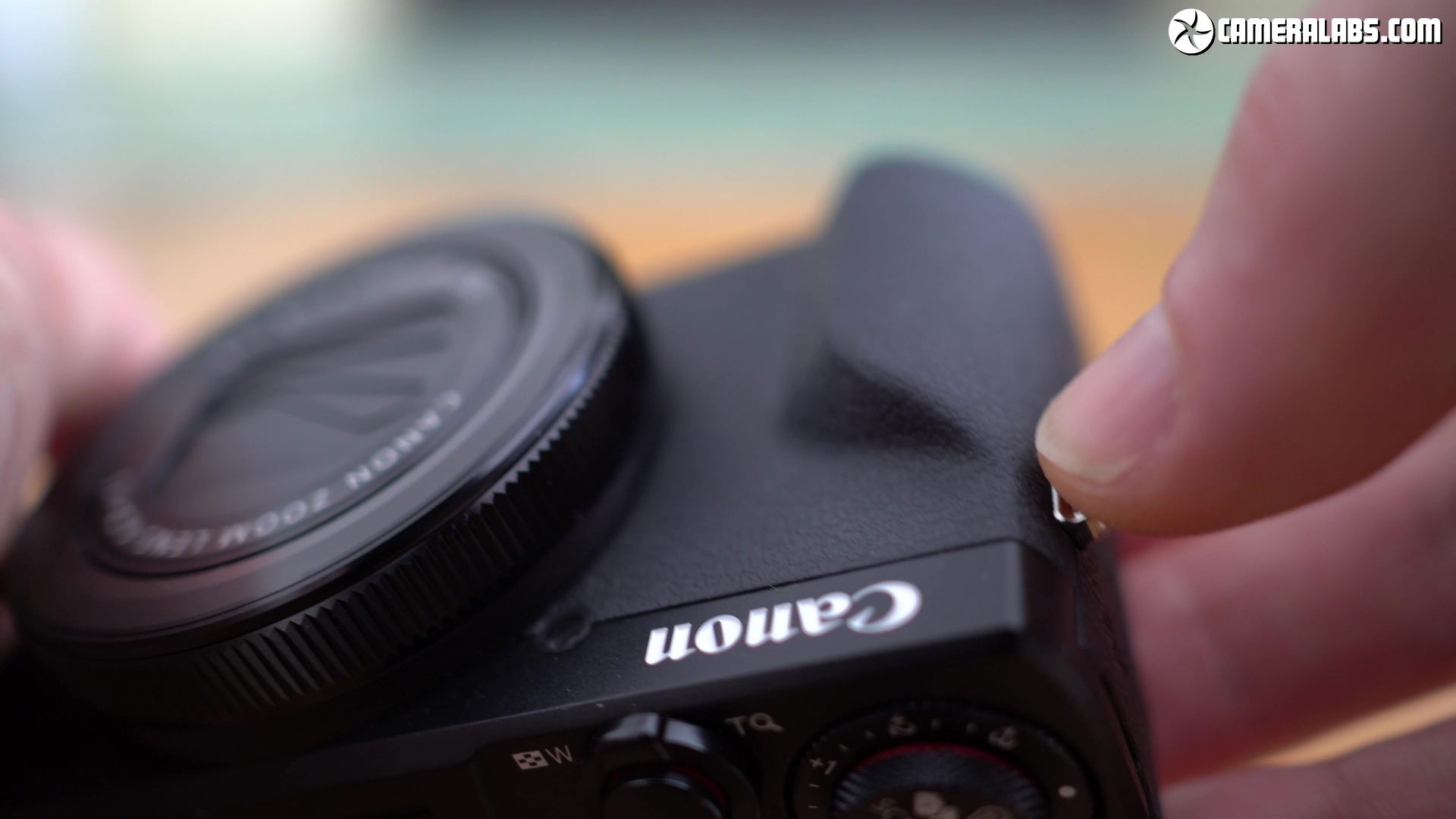
Both Canon's have small merely effective front grips that make them far more comfortable to hold and use than the smooth-fronted Sony. Here's the G7X III's grip.

And in real time here's the slightly different grip of the G5X II. Both Canyon's give you many to hold onto than the Sony.

The viewfinder on the G5X II means its popup scoot is positioned in the middle of the torso versus the box on the G7X III.
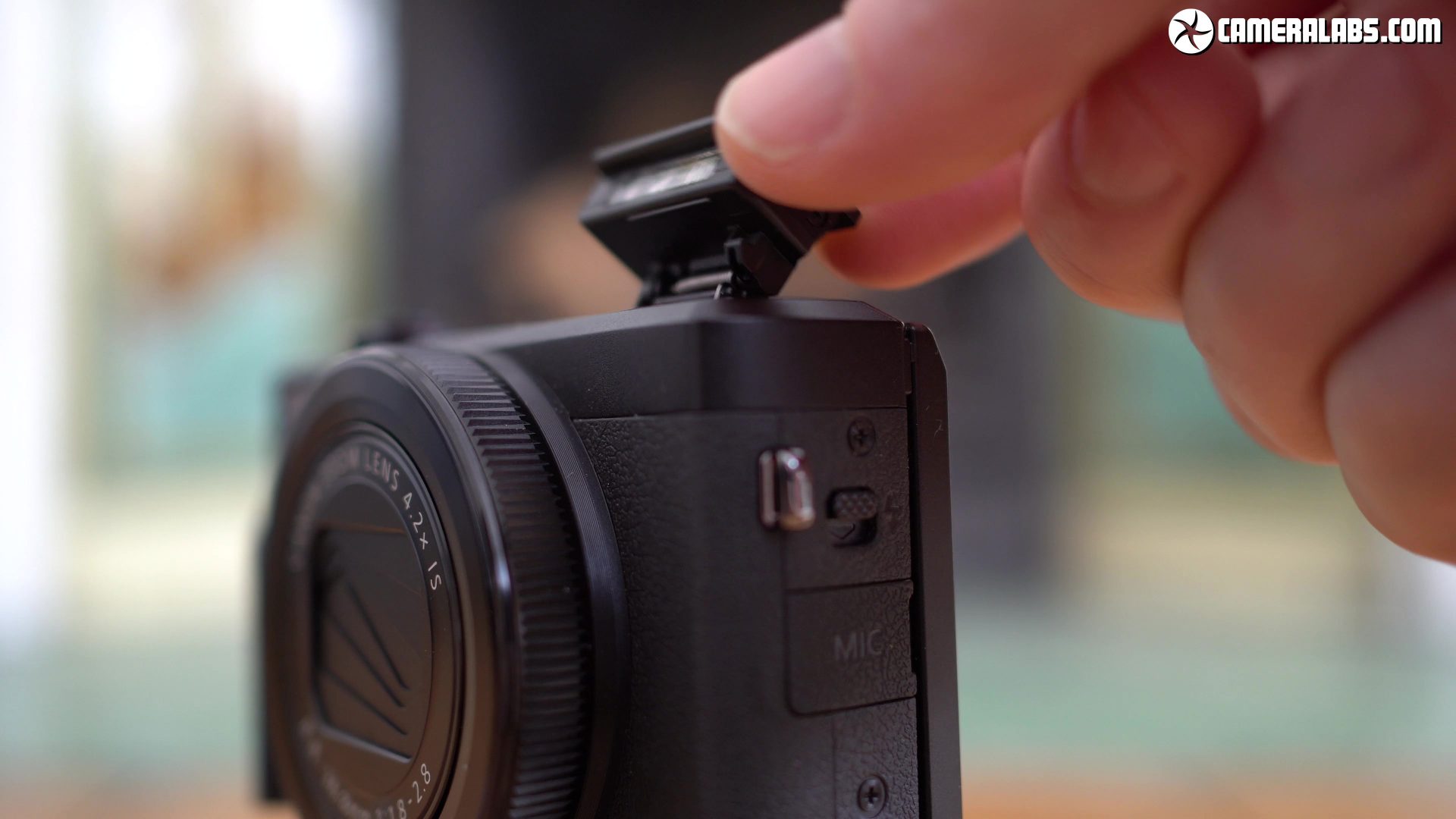
Some tin be held in a position pointing upwards for an improvised take a hop effect although their modest size means you'll need a very low-lying roof and close affected to enjoy any impact.

Both share the same screen articulation, although a strip on the top of the G5X II's expose makes information technology easier to close down low for shot above head height.

Both consume movie record buttons on their rear, merely the G7X Triplet adds an extra touch record button in the corner of the screen.

And at length, the shutter release buttons along some bodies are slenderly assorted. It's slightly vaulted on the G7X III, but slimly crenelated on the G5X Cardinal (as seen two pictures above) and to my own fingers, I best-loved the indent. To be honest none of these design differences are significant, but information technology is interesting how Canyon's successful two otherwise very similar look cameras feel slightly different when used side-by-side.
Above: Download the original lodge (Registered members of Vimeo only).
Check prices on the Canon PowerShot G7X III at B&H, Amazon, Adorama operating theater WEX. Alternatively get yourself a copy of my In Camera book or treat me to a coffee berry! Thanks!Pages: 1 2 3 4
Canon PowerShot G7X III review
Source: https://www.cameralabs.com/canon-powershot-g7x-iii-review/

Posting Komentar untuk "Canon PowerShot G7X III review"